An inquiry conducted in the Lakeshore district of Nkhotakota shows that many employees in small businesses (informal sector) continue to earn below the statutory minimum wage of 105 thousand kwacha per month as per newly gazette minimum wage which came into effect on 1st June, 2025, leaving them vulnerable to exploitation.
In May 2025, the government, through the Ministry of Labour, gazetted the revised minimum wages under the Employment Act (Minimum Wages Order). The law sets the minimum wage for informal sector workers at between K72,800 and K126,000, depending on their category.
For domestic workers, the minimum wage is set at K72,800; for those employed in micro and small enterprises, it is K105,000; while workers in medium-sized enterprises are entitled to K126,000.
The revisions were made in consultation with key stakeholders, including the Employers Consultative Association of Malawi and the Malawi Congress of Trade Unions.
However, findings by Umunthu FM in Nkhotakota District reveal a worrying picture: many employers are failing to comply with these provisions, leaving several workers trapped in persistent poverty despite the legal protections designed to safeguard them.
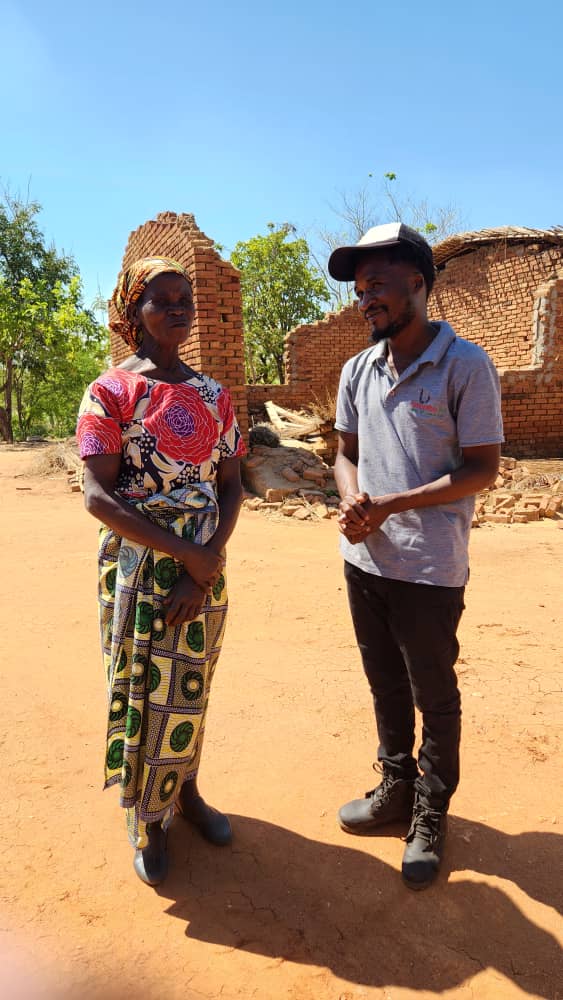
One such victims is Joana Nkhata (name withheld) from Ntchisi District who had struggled for a long period seeking for a greener pasture.
She now works at a restaurant at Nkhotakota Boma and receives K40,000 a month, far below the legal minimum.
She said there are months when she receives nothing at all, making life unbearable for her family.
“I find it hard to sustain my family as I earn K40,000 a month. Sometimes I have nothing by month end as I use to collect an advance payment,” Nkhata said.
To understand the wider scale of the problem, we also spoke to a man whom we have named Malikebu, not his real name, a shop attendant at a well-known retail shop in Nkhotakota.
He earns K65,000 per month, though the law recommends nearly double that amount for his category, making it difficult for him to cushion the impact of rising cost of living which is taking a toll on his family.
Malikebu said many workers are afraid to speak out because employers often threaten to replace them.
Malikebu said, “We ask our friends when we are having conversation during our free time on how much they receive from their employers per month, they also complain”.
“Sometimes bosses threaten to replace us when we continue tormenting them with requests to adjust our salaries,” added Malikebu
Chairperson of Nkhotakota Restaurants Association, Dzimbiri Manyumba, admitted that the law exists, but argues that harsh economic conditions have made compliance difficult for many business owners.
Manyumba stated, “off course we are aware of the minimum wage laws but we always face harsh economic conditions making us fail to comply with the laws.”
Nkhotakota District Labor Office said it is aware of these challenges.
District Labor Officer, Charity Mwambira, said the office continues raising awareness and engaging employers on the need to follow labor laws, but their ability to enforce inspections is limited due to inadequate funding.
“As a council we move around communities intensifying efforts to raise awareness but sometimes we are jammed by financial constraints to reach a wider range of communities,” said Mwambira.
The Malawi Congress of Trade Unions, who were part of the wage revision consultations, blames weak enforcement.
Its president, Charles Kumchenga, called on the Ministry of Labor, ECAM and district labor offices to actively coordinate efforts in addressing minimum wage violations.
Kumchenga Stated, “Yes as MCTU, we have always been receiving such complaints. We believe this is being escalated due to weak enforcement of the laws by authorities and we ask for their swift intervention”.
Commenting on the matter, Public Relations Officer for the Ministry of Labor, Nellie Kapatuka, confirmed that the ministry continues to receive reports of non-compliance from different districts.
She said the ministry is conducting routine and targeted inspections to ensure that employers respect workers’ rights as mandated by the Employment Act.
A renowned Labor law expert Luther Mambala believes the situation could improve if Small and Medium Enterprises were offered incentives or support to help them comply with minimum wage standards.
He also said trade unions must continue to educate both employees and employers about their rights and obligations.
He doubts if employees’ rights can be safeguarded in absence of trade unions.
“Informal sectors are hard to monitor if they are complying with the labor laws, however, employees must be encouraged to join unions that will be able to stand for their working rights during such scenarios. How can employees’ rights be promoted without unions?” he asked.
However, legal scholar Professor Edge Kanyongolo, former Dean of Law at the University of Malawi, takes a different view.
He argues that Malawi’s broader wage structure — even within the civil service — remains too low, which indirectly encourages the proliferation of low-paying informal jobs.
He urges government to introduce practical and well-funded interventions to address the root causes.
Kanyongolo stated, “Let me remind you that most of the employers in the informal sector comes within the civil service who are also earning too little so I would like to ask the government to revise its wage structure in the civil service to stimulate this root cause”.
By looking at this scenario, one can depict a picture that across the country, many workers like Joana and Malikebu continue to earn salaries far below what the law prescribes.
Fear of dismissal, limited awareness of labor rights and weak enforcement mechanisms are major barriers to achieving compliance with Malawi’s minimum wage laws.
Under the Employment Act, every worker is entitled to fair wages and a safe working environment.
Yet for many Malawians in the informal sector, these rights remain far from being realized.